English · Nederlands · Deutsch
Asio flammeus · Velduil · Sumpfohreule
Short-eared owl
1 tagged bird on this site

- Tracked birds
- 1from open research studies
- Positions
- 88GPS fixes stored
- Tracked between
- 16.3°N – 59.9°Nnorth–south spread
- Latest signal
- 11 Feb 2026across all tagged birds
Where the tracked short-eared owls are now
Each dot is one tagged bird's most recent position.
About short-eared owls
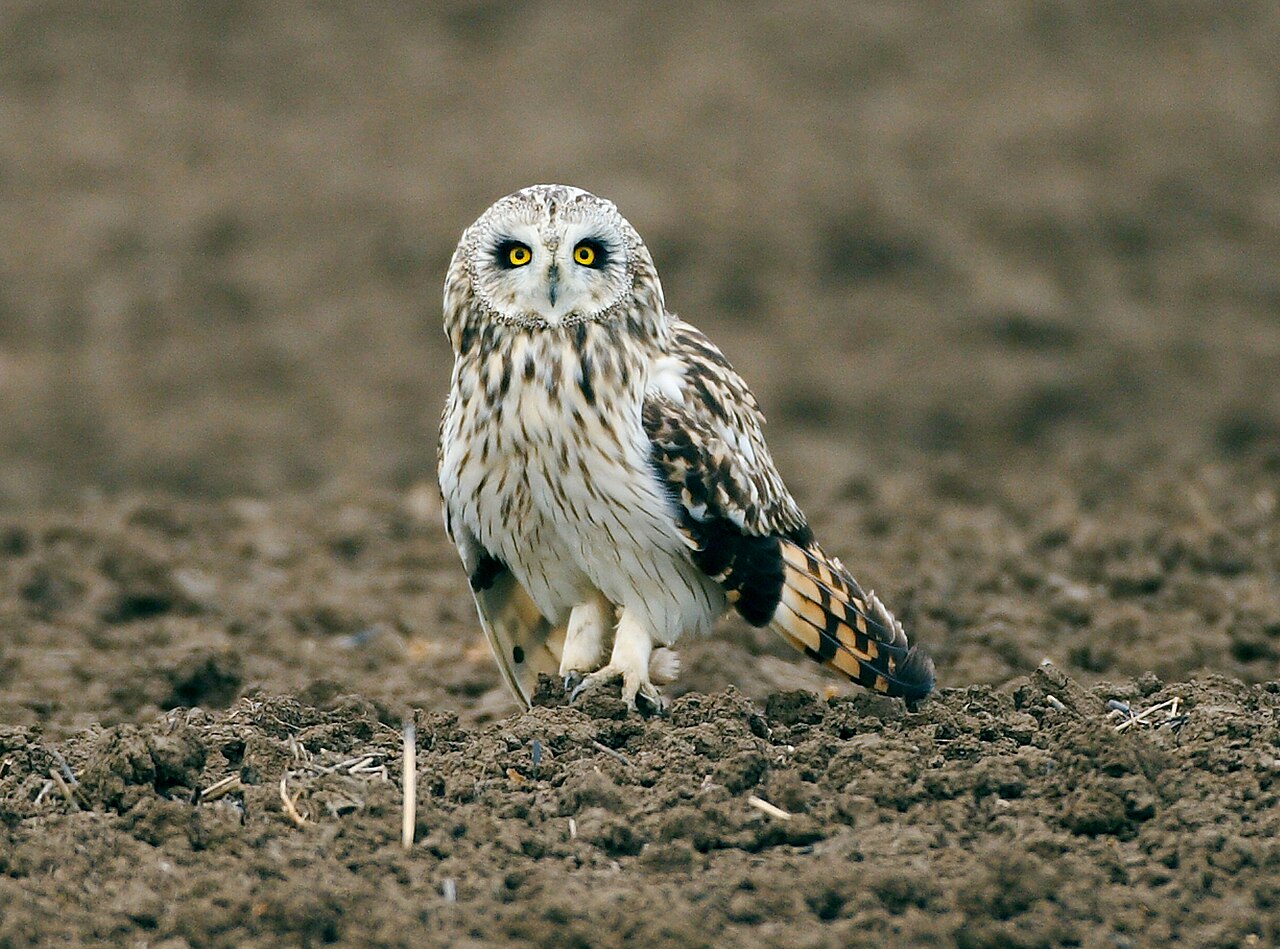
The short-eared owl is the owl you can meet in broad daylight: a long-winged, mottled brown bird quartering low and systematically over open ground, or watching from a fence post with fierce yellow eyes set in dark feathering. The ear tufts it is named for show only when the bird chooses to raise them. It lives and dies by voles, and where the voles are is where it goes.
How short-eared owls migrate
Short-eared owls breeding in Germany and the Low Countries are only partial migrants, and the species is better described as nomadic in virtually every season than as following a fixed route. Ringing shows Dutch-hatched birds settling at enormous distances while northern European and Russian owls appear here in their place, so the birds present in winter are largely not the ones that bred here. Autumn movement runs from August into late October, with most birds reaching their wintering grounds in October and November; the return is mainly March and April, into May for the most northerly breeders. Birds of the North Sea littoral travel the shortest distances of any European population, so a share of local breeders simply stays put, and an estimated 100 to 500 winter in the Netherlands. Those that do leave winter in western and south-western Europe and the western Mediterranean, some reaching north-west Africa. Where they go in any given autumn depends less on the calendar than on the vole supply, which is why numbers swing so wildly from year to year.
Key facts
- Length
- 34–42 cm (sources differ)
- Wingspan
- 85–110 cm
- Leaves
- August to late October, peaking over the Low Countries in October; many birds never leave at all
- Returns
- March and April, into May for the most northerly breeders
- Winters in
- Western and south-western Europe and the western Mediterranean, some reaching north-west Africa; an estimated 100–500 winter in the Netherlands
- Changing habits
- Agricultural intensification has all but stopped the roughly three-year vole cycle in the Netherlands, so breeding numbers now spike only in occasional rodent years (2014, 2019, 2023)
- Population
- 15–30 breeding pairs in the Netherlands (2025) against 130–185 in the mid-1970s; 40–180 in Germany, Red List category 1, threatened with extinction
Is migration happening right now?
Weather radar over the Benelux and Germany measures how many birds are aloft, updated every five minutes. See it for Belgium, the Netherlands or Germany, or watch every tagged bird on the live map.
Tracking data from open CC0 and CC-BY studies published on Movebank; each bird's page credits its study.