English · Nederlands · Deutsch
Larus argentatus · Zilvermeeuw · Silbermöwe
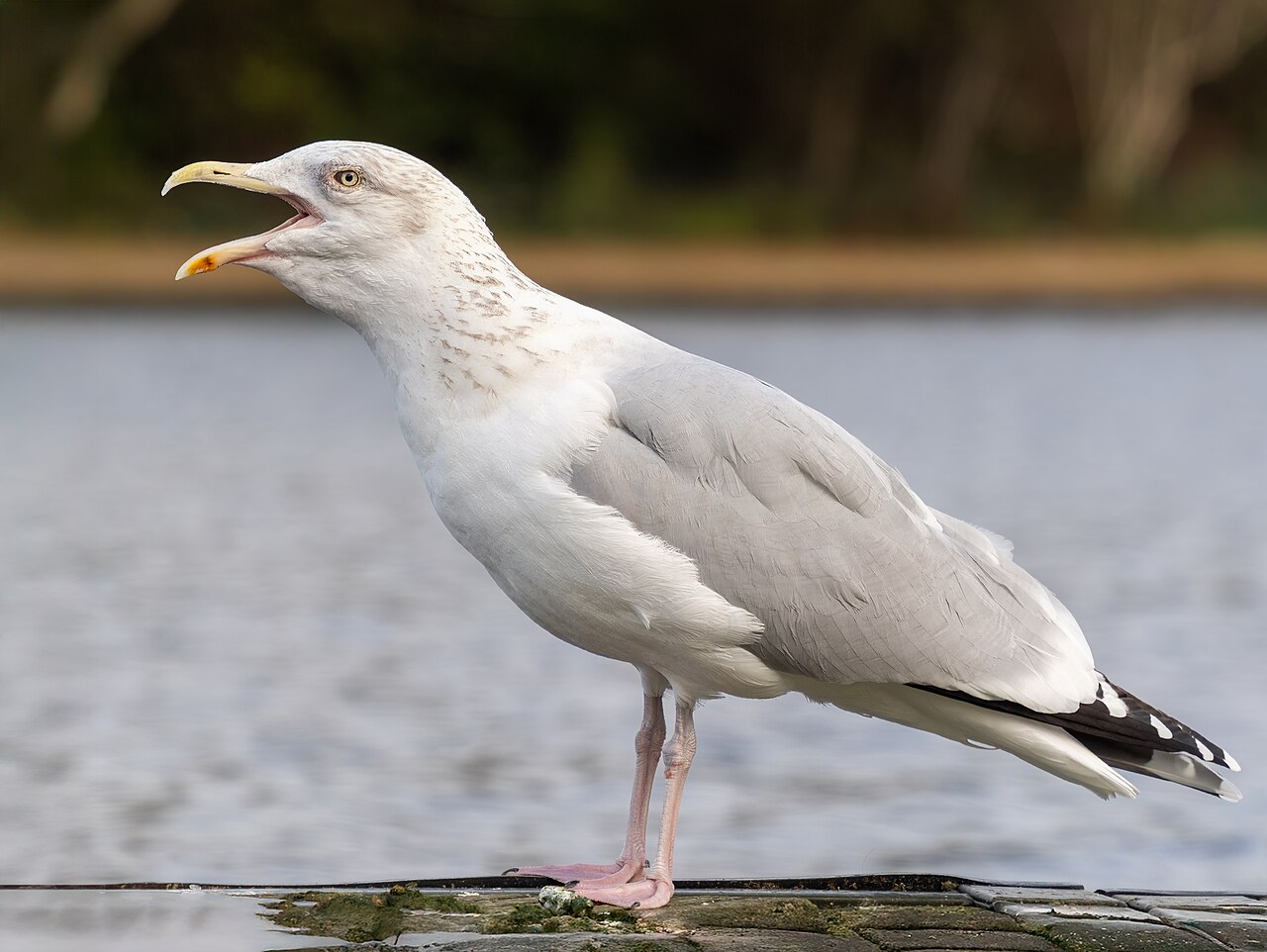
Herring gull
No public tags currently active for this species
.jpg)
About herring gulls
Everyone thinks they know the herring gull — the yellow-billed opportunist on the harbour wall, taking fish, crabs, shellfish and whatever the town leaves out. Look closer and it is a long-lived bird with a long memory: individuals reach 25 to 30 years, pairs recognise each other by voice inside colonies of thousands, and the bond often lasts for life. It is also quietly disappearing — Dutch breeding numbers have almost halved since the 1990s.
How herring gulls migrate
Herring gulls breeding in Germany and the Low Countries are barely migrants at all. Most German breeders spend the winter on the German coast and Dutch birds largely stay within the Netherlands; what looks like migration is mostly post-breeding dispersal from about mid-July, with young birds spreading along the coasts towards northern France and inland breeders shifting to the southern North Sea and Baltic. They are back at the colonies between late February and early April. The birds that really travel are northern ones, and Dutch winter totals of 130,000 to 240,000 are swelled by arrivals from northern and eastern Europe, counted mainly from September to November. The clearest change in this species is about food rather than distance: the Europe-wide closure and capping of open landfills removed a rich winter food source, and in North Rhine-Westphalia wintering numbers that once topped 20,000 fell sharply after the closures of around 2005–2006. Alongside that, the gulls have taken to nesting on rooftops.
Key facts
- Length
- 54–67 cm (sources differ)
- Wingspan
- 120–155 cm (sources differ)
- Leaves
- No true departure — dispersal from mid-July; the main passage over the Netherlands is counted September–November
- Returns
- Late February to early April
- Winters in
- Mostly at home. Only northern populations move south, and 130,000–240,000 winter in the Netherlands including birds from northern and eastern Europe
- Changing habits
- The closure and capping of open landfills cut away a key winter food; North Rhine-Westphalian winter numbers once above 20,000 collapsed after around 2005–2006. The species has also begun nesting on rooftops
- Population
- 24,500–28,500 pairs in the Netherlands (2025), nearly halved since the 1990s; Germany's largest share breeds in the Wadden Sea. German Red List: Vorwarnliste; UK: Red List
Is migration happening right now?
Weather radar over the Benelux and Germany measures how many birds are aloft, updated every five minutes. See it for Belgium, the Netherlands or Germany, or watch every tagged bird on the live map.
Tracking data from open CC0 and CC-BY studies published on Movebank; each bird's page credits its study.