English · Nederlands · Deutsch
Circus aeruginosus · Bruine kiekendief · Rohrweihe
Western marsh harrier
1 tagged bird on this site

- Tracked birds
- 1from open research studies
- Positions
- 300GPS fixes stored
- Tracked between
- 50.9°N – 51.0°Nnorth–south spread
- Latest signal
- 9 Sept 2025across all tagged birds
Where the tracked marsh harriers are now
Each dot is one tagged bird's most recent position.
About marsh harriers
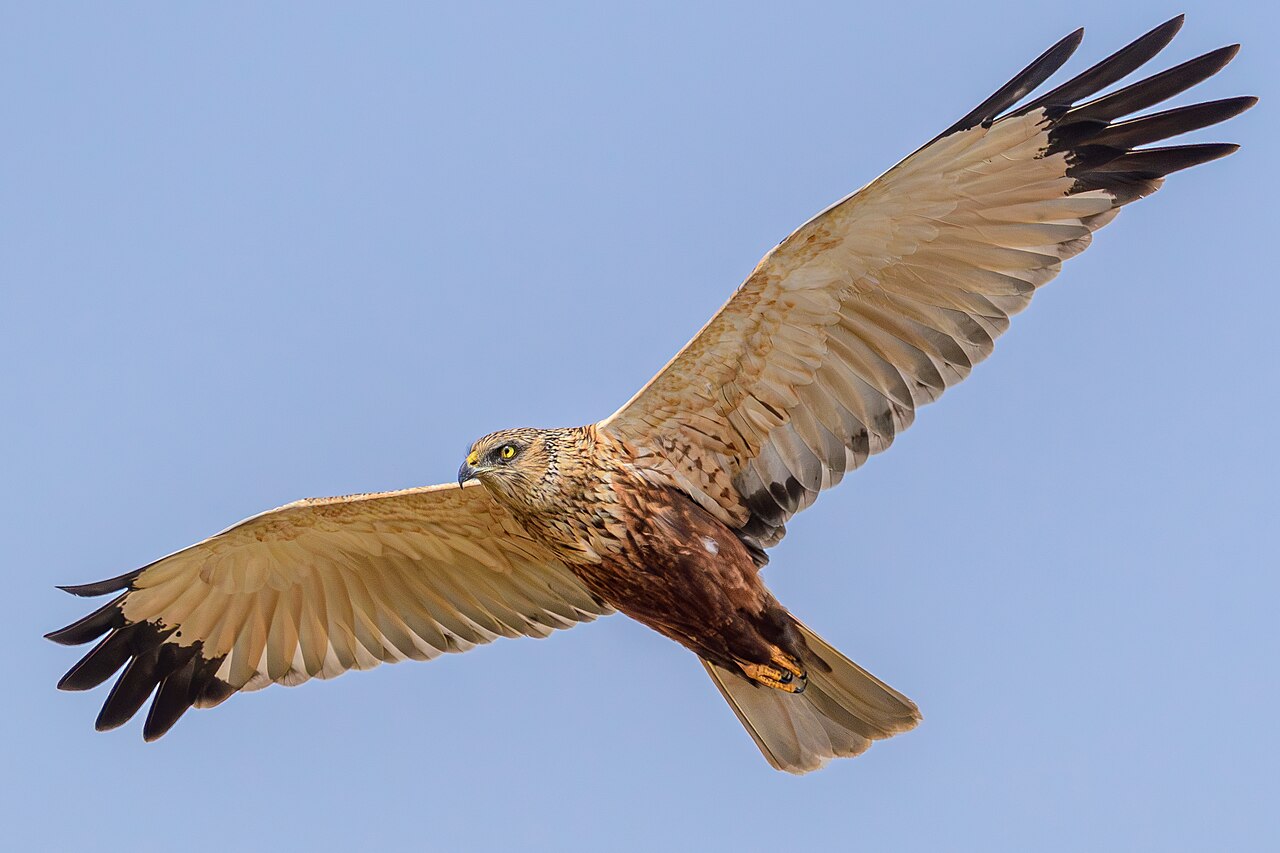
A slender raptor on long, narrow wings, about the size of a buzzard but far leaner in build. The male carries grey in the wing with black tips; the female is brown all over with a cream crown and throat. It is a bird of the reedbed in the fullest sense, nesting on the ground in standing reed beside water — though increasingly in cereal and oilseed rape too — and it needs open country to hunt over.
How marsh harriers migrate
Birds breeding in Germany and the Low Countries leave from mid-August into October, heading south-west to south, with the peak over the Netherlands in mid-September and young birds moving ahead of the adults. Where they end up depends on age, sex and origin: the smaller males go mainly to West Africa, while many juveniles and some females stop short in southern Europe, and western European birds generally travel less far than northern and eastern ones. Wintering therefore spans western Europe and North Africa through to tropical West Africa south of the Sahara. The journey is the dangerous part of the year — mortality during migration is about six times higher than at other times, from exhaustion and hunger, collisions with wires and turbines, and hunting. Return migration runs from late March to April, with stragglers into May. The documented change is at the near end of the range: an estimated 100 to 200 now winter in the Netherlands, concentrated in Zeeland and mostly first-year birds, many now overwinter in the UK, and a minority stay in Germany.
Key facts
- Length
- 43–55 cm
- Wingspan
- 115–145 cm (sources differ)
- Leaves
- Mid-August to October, some from late July; the peak over the Netherlands is in mid-September, juveniles before adults
- Returns
- Late March to April, stragglers into May
- Winters in
- The Sahel and tropical West Africa, but also Iberia, southern Europe and North Africa; small numbers now stay in north-west Europe
- Changing habits
- Increasingly winters north of the Sahara: 100–200 in the Netherlands, mostly first-year birds in Zeeland; many now overwinter in the UK, and a minority stay in Germany
- Population
- 6,500–8,500 pairs in Germany; 800–1,200 in the Netherlands; 100–140 in Flanders
Is migration happening right now?
Weather radar over the Benelux and Germany measures how many birds are aloft, updated every five minutes. See it for Belgium, the Netherlands or Germany, or watch every tagged bird on the live map.
Tracking data from open CC0 and CC-BY studies published on Movebank; each bird's page credits its study.