Distance 3,546 kmalong recorded positions
Tracked for 338 days24 Sept 2025 – 28 Aug 2026
Positions 602GPS fixes stored
Latest fix 28 Aug 202641.56°N, 0.86°W
How far north Noé was
40.2°N 44.6°N 48.9°N 24 Sept 2025 · 40.3°N 2 Oct 2025 · 40.3°N 21 Oct 2025 · 40.3°N 29 Oct 2025 · 40.3°N 22 Nov 2025 · 40.3°N 20 Jan 2026 · 40.3°N 31 Jan 2026 · 46.0°N 20 Feb 2026 · 48.9°N 4 Mar 2026 · 48.9°N 6 Apr 2026 · 48.9°N 6 Apr 2026 · 48.9°N 6 May 2026 · 48.9°N 5 Jun 2026 · 48.9°N 5 Jun 2026 · 48.9°N 5 Jul 2026 · 48.9°N 5 Jul 2026 · 48.9°N 4 Aug 2026 · 48.9°N 4 Aug 2026 · 48.9°N 18 Aug 2026 · 41.6°N 19 Aug 2026 · 41.6°N 19 Aug 2026 · 41.6°N 19 Aug 2026 · 41.6°N 19 Aug 2026 · 41.6°N 20 Aug 2026 · 41.6°N 21 Aug 2026 · 41.6°N 21 Aug 2026 · 41.6°N 21 Aug 2026 · 41.6°N 23 Aug 2026 · 41.4°N 23 Aug 2026 · 41.5°N 24 Aug 2026 · 41.3°N 24 Aug 2026 · 41.5°N 25 Aug 2026 · 41.6°N 25 Aug 2026 · 41.6°N 25 Aug 2026 · 41.6°N 26 Aug 2026 · 41.6°N 27 Aug 2026 · 41.6°N 24 Sept 2025
28 Aug 2026
Latitude of every recorded position, 40.2°N to 48.9°N. A migration shows up here as a long slope; a settled bird as a flat line. About white storks
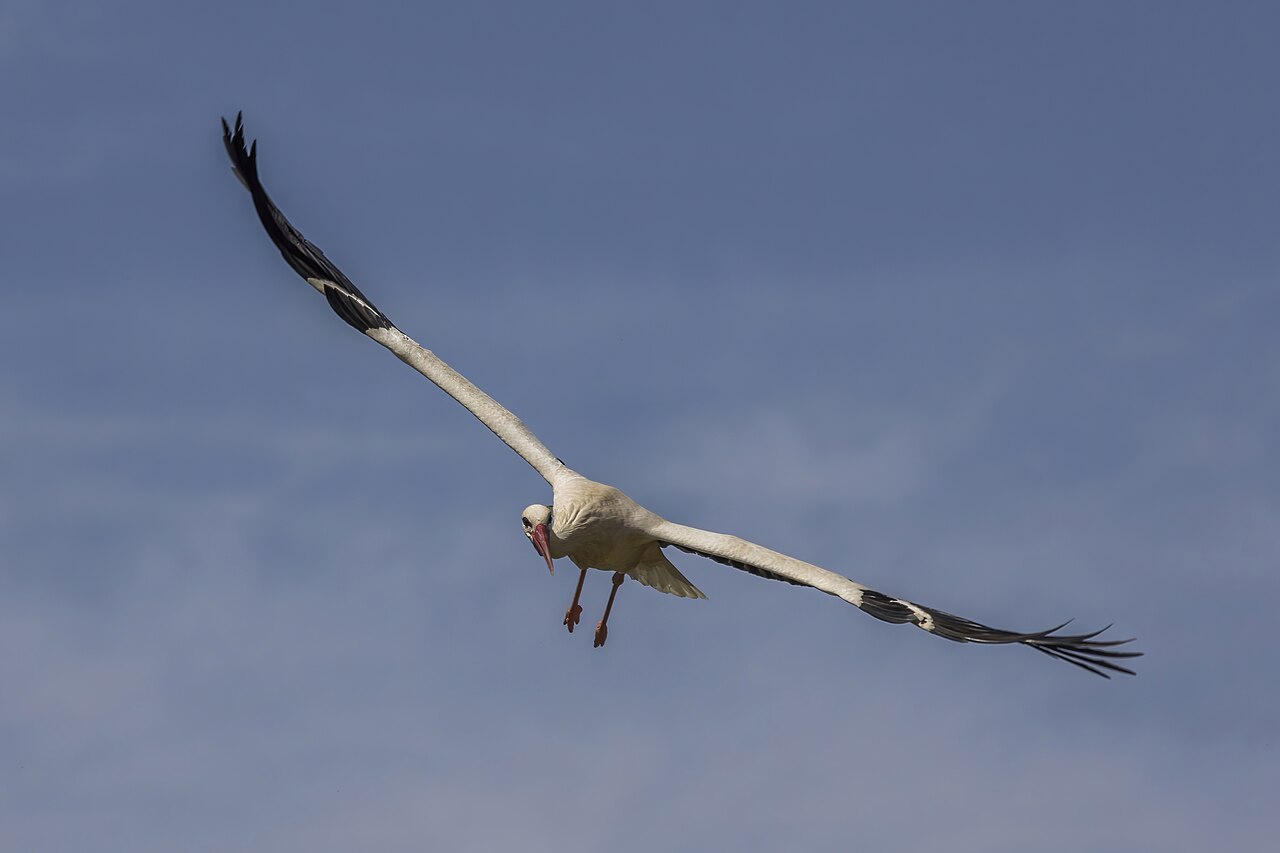
For illustration: White stork, not this individual. Photo: Charles J. Sharp (Charlesjsharp), sharpphotography.co.uk , CC BY-SA 4.0
Europe's best-known migrant, and the one most people can recognise from a moving car: white, black-winged, red-billed, and nesting in full view on chimneys, church towers and purpose-built poles. Storks were among the first birds ever fitted with satellite tags, which is why so much of what we know about bird migration was learned from them.
Data: LifeTrack White Stork Sarralbe via Movebank (study 1562253659, CC0). Tracking identifier Noé (CK16336 FRUH, 180815).
_in_flight.jpg)